Founding Cohort · Course No. 1
Build real software with AI
Bring an idea, feature, or problem. In two weeks, learn how to scope it, direct an AI coding agent, correct its mistakes, and ship a working first version.
Founding Cohort · $249 $99 · Limited to 20 participants
Enroll by July 31st — training starts Monday, August 3rd.
Reserve your seatDates
August 3–14, 2026
Enroll by July 31st
Length
Two weeks
3 live workshops + 2 optional clinics, evenings at 7:00 pm ET
Founding price
$249 $99 through July 31st
Includes lifetime access to the edited course
Capacity
20 participants
Sized to real feedback capacity, not fake scarcity
Enrollment is open now — reserve your seat by July 31st. Every live session starts at 7:00 pm ET: two-hour workshops Monday Aug 3, Thursday Aug 6, and Wednesday Aug 12, plus optional one-hour clinics Wednesday Aug 5 and Monday Aug 10. Everything is recorded.
Syntax was never the hard part
You no longer need to spend years mastering programming syntax before you can begin building useful software. AI has lowered that barrier — but someone still needs to know what to build, how to direct the work, and whether the result is correct.
That's why so many people who "learned to code" never shipped anything, and why so many AI-generated projects stall at 80% done. Writing code is only one part of developing software. The valuable skill is knowing how to take an idea and make it real: framing the problem, deciding what belongs in the first version, recognizing failure, recovering from mistakes, and finishing useful work.
I'm not going to teach you how to write code. You can learn that anywhere. I'm going to teach you everything else.
What you'll walk away with
Every deliverable is a real artifact from your own project — not homework invented for the course.
Artifact 01
An agent-ready task brief
Your idea turned into an executable specification, with a reviewed implementation plan.
Artifact 02
A working implementation
Built by directing an AI agent — plus a record of the decisions, failures, and corrections along the way.
Artifact 03
A verified release
Your first version, tested and shipped — not a plausible-looking pile of unreviewed output.
Artifact 04
Your personal playbook
A one-page AI-development playbook you'll keep using long after the cohort ends.
Who this is for
A good fit if you are
- A professional who wants to build an alternative to an unsatisfying job
- A founder or indie builder with a product idea
- An operator, designer, or marketer who wants to create internal tools
- A newer developer who can write code but struggles to finish products
- An experienced developer whose results with coding agents remain inconsistent
Not a good fit if you want
- A no-code experience — you must be willing to inspect code, troubleshoot, and think critically
- A promise that you'll become a professional software engineer in two weeks — nobody can honestly sell you that
- Passive video content — this is a working cohort built around your own project
No professional software-development experience is required. You do need to be comfortable using a computer, willing to learn technical concepts, and ready to bring a small, realistically scoped idea, feature, or problem.
How the two weeks run
-
Before
Project intake & scope check
You submit your project idea, who it's for, what "done" looks like, your tools, and any constraints. Sean reviews every submission so the cohort starts with workable projects.
-
Week 1
Workshops 1 & 2 (Mon Aug 3 & Thu Aug 6) + optional clinic (Wed Aug 5)
Design the work for an agent, get your plan reviewed, and direct the implementation on your own project between sessions.
-
Week 2
Workshop 3 (Wed Aug 12) + optional clinic (Mon Aug 10)
Verify, test, and ship your first version by Friday Aug 14. Leave with a verified release and your personal playbook.
-
Throughout
Cohort space, recordings & feedback
A private discussion space, recordings of every session, and direct feedback on at least one submitted task.
The live curriculum
Session 1
Designing work for agents
The AI-driven development loop. Choosing an appropriately sized task, turning an idea into an executable specification, providing context and acceptance criteria, separating exploration from planning from implementation, and reviewing an agent's plan before any code is written.
You produce: an agent-ready task brief and a reviewed implementation plan.
Session 2
Directing implementation
Delegating without micromanaging. Recognizing drift early, correcting an agent without restarting unnecessarily, deciding when human intervention is needed, managing context on longer tasks, and using multiple agents only when work is genuinely independent.
You produce: a working implementation and a short record of key decisions, failures, and corrections.
Session 3
Verification and shipping
Reviewing AI-generated changes. Testing behavior rather than trusting plausible output, finding shallow fixes and hidden regressions, using AI as a reviewer without outsourcing judgment, deployment basics, and improving your workflow after each project.
You produce: a verified release and a one-page personal AI-development playbook.
The two optional working sessions are clinics, not lectures: scope a difficult idea, critique a plan, diagnose an agent gone off track, debug a failing implementation, or compare approaches to the same task.
Everything included
- AI-ready task-brief template
- Codebase-context template
- Implementation-plan review checklist
- AI-generated code review checklist
- Verification and shipping checklist
- Personal playbook template
- Recordings and transcripts of every session
- Direct feedback on at least one submitted task
- Lifetime access to the edited founding-edition course
Your instructor
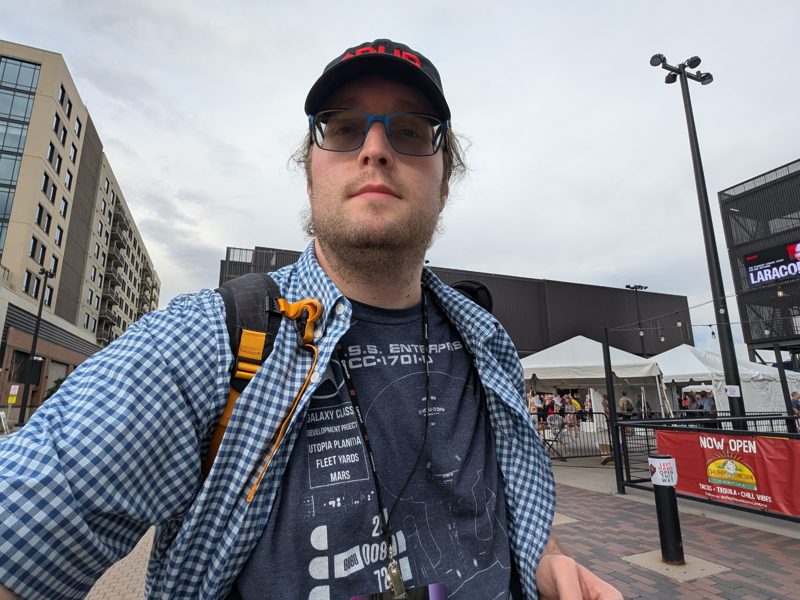
Sean Talbot has built full-stack web applications professionally since 2008 and worked with PHP since 2004 — maintaining legacy systems, building new platforms, teaching Laravel, and helping run developer education in Louisville. Today he uses AI coding agents daily on real client work: production systems with actual users, deadlines, and consequences.
That matters because this course is not theory. The workflow you'll learn is the one Sean actually uses — including where it breaks, and what to do when it does. He is pragmatic about both the power and the limits of AI, and the course is honest about both.
Teaching track record
This isn't Sean's first classroom. In 2019 he designed and taught Theta Labs' in-person Full-Stack Web Bootcamp, taking frontend developers through building real-world applications with PHP, Laravel & Vue.js.
What "founding" actually means
This is the first run of Talbot Tech's first course. You are buying a live, working program — not a polished video library. Here is the honest state of things:
- Available now: enrollment. Reserve one of 20 seats by July 31st — $99 by card, confirmed instantly, refundable per the refund policy.
- With onboarding: calendar invites for all five sessions (evenings, 7:00 pm ET), your project intake and scope check, discussion-space access, and setup instructions.
- Live during the cohort: all three workshops and both optional clinics. Recordings are posted after each session.
- After the cohort: the recordings, participant questions, and real mistakes become the edited founding edition — which every founding participant gets for life.
- May change: parts of the program will be adjusted in response to the founding cohort. That's the point of a founding cohort.
What's required of you
- Bring a small, realistically scoped idea, feature, or problem. Sean scope-checks every project before the cohort begins.
- Be comfortable using a computer and learning technical concepts. No professional development experience is required.
- Be willing to inspect code, troubleshoot, and think critically. This is not a no-code course.
- Show up: attend the live workshops (or watch the recordings promptly) and put real hours into your project between sessions. Plan on 8–10 hours per week, including the live sessions.
Questions people actually ask
I've never written code. Can I do this?
Possibly — no professional experience is required, but this is not a no-code course. You must be willing to look at code, troubleshoot, and learn technical concepts. If you're comfortable learning new tools and thinking critically, you're likely fine. If you want software to appear without ever understanding it, this isn't for you.
I'm an experienced developer. Is this too basic?
The course isn't about syntax, so experience with syntax doesn't make it redundant. If your results with coding agents are inconsistent — sometimes magic, sometimes a mess you rewrite by hand — the workflow discipline here is exactly the gap.
Will I become a professional software engineer in two weeks?
No, and you should distrust anyone who promises that. You'll learn a modern software-building workflow, ship a real first version, and leave with a foundation for continued learning.
What if I can't attend a live session?
Every session is recorded and posted afterward, with transcripts. Live attendance is strongly encouraged — the feedback is the point — but a missed session doesn't sink you.
What AI tools do I need?
You'll need access to a modern AI coding agent; specific tool recommendations and setup instructions arrive with onboarding. The workflow taught is deliberately tool-agnostic — tools change monthly, judgment doesn't.
What's the refund policy?
Full refund any time before the cohort starts August 3rd — and through August 5th, even after you've seen the first workshop. Details on the refund policy page.
Why only 20 people?
Because every participant gets a project scope-check and direct feedback on submitted work, and 20 is what one instructor can review honestly in two weeks. It's a capacity number, not a marketing tactic.
The commitment
A real deadline, real seats, and no income claims. A clear refund policy you can read before you pay. A real program, taught live, sized so every participant gets genuine attention — and honest about being a first run.
Enrollment open
Reserve your seat at the table
Pay by card and your seat is confirmed instantly — onboarding instructions follow by email. Enroll by July 31st; training starts Monday, August 3rd.
Enroll now — $99
Buying for someone else? Gift a seat at the table →
Prefer an invoice? Email Sean.
Not ready to commit?
Join the list instead — you'll get the AI-Ready Task Brief template and a reminder before the July 31st deadline. No spam, unsubscribe anytime.